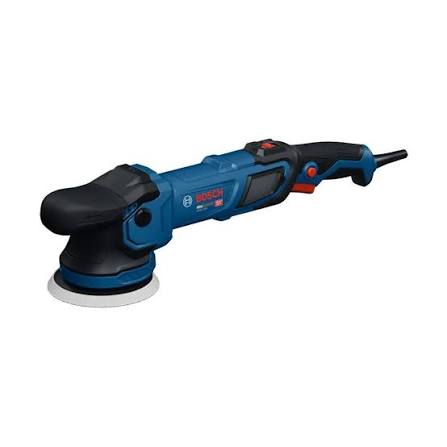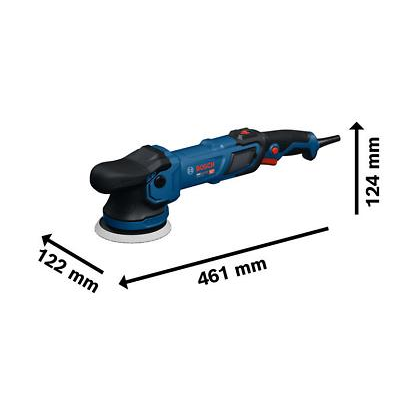
Polisher machines for paint correction, boat and gelcoat work, stone and metal finishing: rotary polishers from Makita, Bosch Professional, DeWalt and Metabo in 125mm, 150mm and 180mm pad sizes. These are trade machines with variable speed and soft start, not the random-orbital car polishers sold for a weekend wax.
Choosing a polisher machine
- Pad size: 180mm (Makita 9237CB, Bosch GPO 14-180 S and GPO 11-180 S, Metabo PE 15-20 RT) is the standard for panel beaters, boat builders and stone polishers. The DeWalt DWP849X runs 150 to 230mm pads. The Bosch GPX 9-125 S is the compact 125mm option for tight areas.
- Speed control: look for a variable speed dial and a trigger with lock-on. Low speed around 600 to 1000rpm is used for compounding with wool; higher speed for finishing with foam. The Makita 9237CB and DeWalt DWP849X both have electronic speed control with constant speed under load.
- Power: the Bosch GPO 14-180 S and Makita 9237CB are the heavier-duty motors for continuous work; the GPO 11-180 S is lighter for overhead and vertical panels.
- Handle: side handle or D-handle. Most 180mm rotaries ship with a loop or side handle; choose what you can hold for an hour.
Sander polisher vs angle grinder with a pad
An angle grinder spins at 10 000rpm or more and will burn through paint and gelcoat in seconds. A sander polisher is geared down to 600 to 3 000rpm with a soft start, which is what makes it controllable. Do not try to polish with a grinder. Pads and compounds are in polishing pads and compounds, Festool's rotary and random-orbital machines are in Festool polishers, and for sanding first see sanders.
In stock in Cape Town with nationwide courier delivery, free on orders over R2000. Call 021 674 2119 for advice.