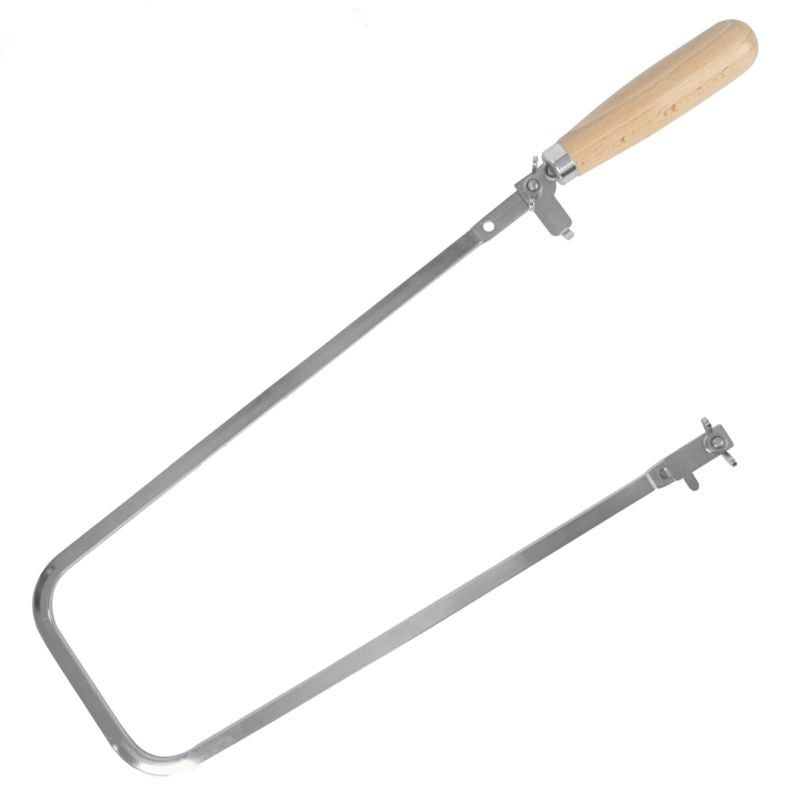
A coping saw is the hand tool for cutting tight curves, scribing skirting and cornice joints, and clearing the waste from dovetails. This collection covers coping saws and fret saws for woodworkers, carpenters and model makers who need a fine blade that can turn inside a cut.
Choosing a coping saw or fret saw
- Throat depth. The distance from blade to frame sets how far in from an edge you can cut. The Olson Scroll / Fret Saw Frame 250mm Deep reaches 250 mm into a panel, far more than a standard coping saw frame.
- Blade type. Coping saw blades have pins at each end and are thicker, so they cut faster but turn a wider curve. Fret saw blades are plain-ended and much finer, which is what the Olson frame takes, so you can follow intricate scroll work.
- Tension. A frame that holds high tension keeps the blade from wandering. Tighten the blade until it pings when plucked, and fit it with the teeth pointing towards the handle so it cuts on the pull.
Coping saw vs fret saw
Both are a thin blade held under tension in a U-shaped frame, and both cut curves that a hand saw cannot. A coping saw is the general-purpose tool: shallow frame, pin-end blades, quick blade changes, good for coping skirting and mouldings on site. A fret saw has a deeper frame and takes finer plain-end blades, so it is the better choice for marquetry, scroll work and dovetail waste where a clean, narrow kerf matters.
Stock is in our Claremont, Cape Town shop and ships nationwide by courier. Our staff use these saws for fitting and joinery work and can advise on blade choice. See the full hand tools range, or jigsaws for powered curve cutting.